From Solo Driving to Shared Rides: How Vanpooling Changed Kirti’s Commute
For many commuters, driving alone feels like the default. Long hours in traffic, expensive parking, and the mental toll of congestion quickly become part of the daily routine. For Kirti Rajpurohit, a commuter from Chantilly, Virginia, that routine became unsustainable. Discovering vanpooling through the Commuter Connections program ultimately transformed not only how she got to work, but how she felt at the start and end of each day.
For those who have never tried carpooling or vanpooling, Kirti’s experience offers a clear picture of what life can look like on the other side of solo driving.
Before Vanpooling
Before the pandemic, Kirti regularly participated in carpools. However, as work schedules shifted to hybrid and telework arrangements, coordinating shared rides became difficult, so she returned to driving alone.
Her commute from Chantilly into the District regularly exceeded an hour and could stretch even longer when traffic and parking were factored in. Parking near her office was a daily challenge. Underground garage spaces were extremely limited, nearby garages were expensive, and street parking often required circling multiple blocks with no guarantee of finding a spot. The combination of traffic, parking uncertainty, and rising costs made each commute mentally and physically draining.
Over time, the stress added up. What should have been a predictable start and end to the workday became one of the most exhausting parts of her routine.
Discovering Commuter Connections
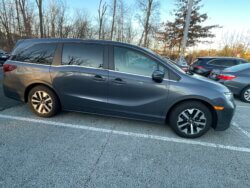
Kirti’s vanpool through Commuter Connections
Determined to find an alternative, Kirti took the initiative to research commuting options on her own. Through an online search, she discovered the Commuter Connections website and learned about a vanpool route operating near her home. Commuter Connections offers free ridematching services that enable commuters to find other individuals who share similar commute routes and work hours, fostering carpooling opportunities that reduce transportation costs, ease traffic congestion, lower environmental impact, and build a sense of community among participants.
The route offered exactly what she needed: a park and ride location just minutes from her house and a direct trip into the city near the U.S. Department of Transportation building. Although there was not an immediate opening, Kirti stayed interested. When a seat became available a few months later, she joined the vanpool and began a completely different commuting experience.
How Vanpooling Changed Her Life
Joining the vanpool has transformed her life in profound ways.
Reduces Stress: After joining the vanpool, the difference was immediate. One of the most noticeable changes was the reduction in stress. Instead of navigating traffic alone, Kirti could ride comfortably while someone else handled the drive. This allowed her to rest, listen to music, or casually talk with fellow riders, rather than remaining constantly alert behind the wheel.
Vanpooling also brought structure and consistency to her day. Having a set schedule created a sense of routine that made mornings and evenings feel more predictable and manageable. That consistency, combined with shared responsibility, made the commute feel lighter and far less overwhelming.
Saves Money: Financially, vanpooling proved to be a significant improvement. Kirti reduced spending on gas, eliminated daily parking costs, and minimized wear and tear on her personal vehicle. Just as important, she noticed positive effects on her health and well-being. The tension she once carried throughout her commute was no longer present, and she felt more energized arriving at work and returning home.
Builds Community: In addition to these benefits, vanpooling introduced Kirti to a strong sense of community. Her vanpool consists of a small group of regular riders who stay connected through a group text. They communicate openly about timing, adjust for late meetings, and support one another when schedules change. What began as a practical commuting solution evolved into a shared experience built on flexibility, communication, and trust.
That sense of connection makes a meaningful difference. Commuting no longer feels isolating, and the shared experience helps distribute the stress that once fell solely on her shoulders. Over time, the group has become more than just fellow commuters, forming a community that extends beyond the ride itself.
Vanpooling Tips for New Riders
For those considering vanpooling for the first time, Kirti emphasizes that success comes from mutual respect and communication.
- Arriving on time and sticking to the established schedule helps the group run smoothly and builds trust among riders. Clear communication is essential, especially when someone is running late or when work schedules shift unexpectedly. Flexibility also plays an important role, as meetings can run long and occasional adjustments are part of shared commuting.
- Being mindful of shared space is equally important. Simple courtesy and good hygiene go a long way when traveling together daily. Most importantly, Kirti encourages new riders to relax and embrace the experience. Once the routine is established, vanpooling becomes comfortable, easy, and surprisingly enjoyable.
Kirti’s story shows how changing one part of the day can have a powerful ripple effect. By choosing vanpooling through Commuter Connections, she discovered a commute that is less stressful, more affordable, and supported by a tight-knit community. For commuters searching for a better way to get to work, her experience offers a compelling reason to consider vanpooling.